Nursing glossary
Nursing glossary
Like I told you, when you read my blog, you will know better about the program of Nursing. More specifically, you will understand what is it a typical day of a student in a Nursing's program at college. In the following glossary, you will find some word that is important to know in this profession if you want to understand. It will be helpful in every life too because everyone wants to know about their health a little bit.
- Blood pressure
- A noun
- The pressure of the blood in the circulatory system, often measured for diagnosis since it is closely related to the force and rate of the heartbeat and the diameter and elasticity of the arterial walls.
- Example: Many diseases and age-related conditions can be prevented, such as cardiovascular disease and high BLOOD PRESSURE, cancer, atherosclerosis, cataract and age-related macular degeneration.
- fr: Pression artérielle

- Code blue
- A noun
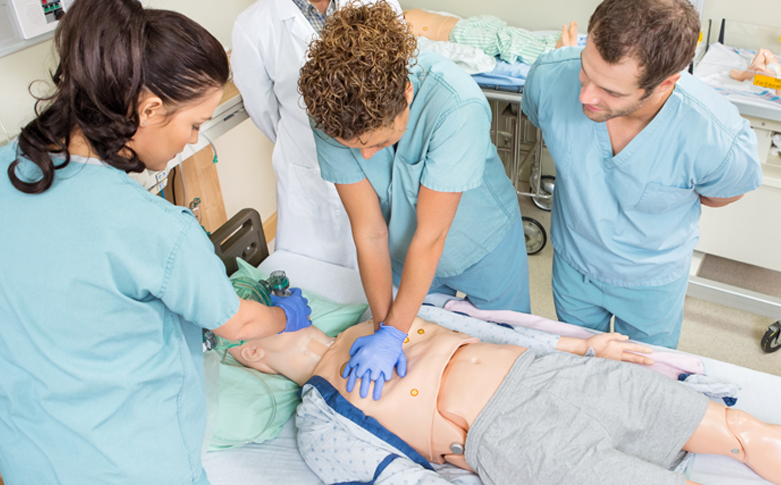
- The term "code blue" is a hospital emergency code used to describe the critical status of a patient. Employees may call a code blue if a patient goes into a cardiac arrest, has respiratory issues, or experiences any other medical emergency.
- Example: The doctor called a code blue to have help for a patient that had a heart attack.
- fr: Code bleu
- Pain scale
- A noun
- Pain scales are tools that healthcare providers used to help measure and better define a person's pain.
- Example: The nurse used a pain scale to choose the good medication to relief her patient of pain.
- fr: Échelle de douleur

- Dysphagia
- A noun
- A dysphagia is simply defined as a swallowing disorder
- Example: He has had no nausea, vomiting, or DYSPHAGIA.
- fr: Dysphagie

- Dyspnea
- A noun
- It is when you feel like you can't get enough air into your lungs, it's also called shortness of breath.
- Example: The clinical symptoms associated with SARS-CoV infection is high fever, rigors, headache, malaise, myalgias, diarrhea and respiratory symptoms, such as DYSPNEA.
- fr: Dyspnée

- Dysuria
- A noun
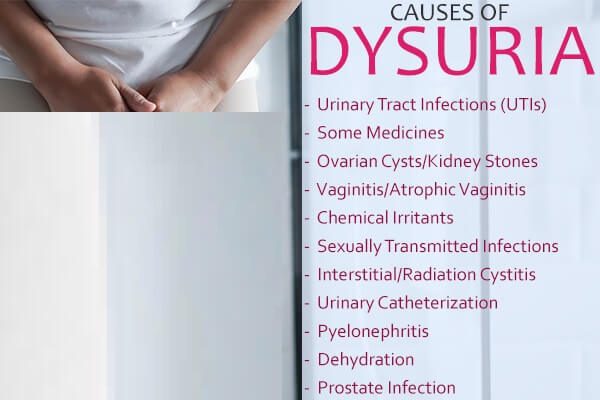
- It means you feel pain or a burning sensation when you pee
- Example: He mentioned that he had DYSURIA.
- fr: Dysurie
- Insulin
- A noun
- It is a hormone produced in the pancreas, which regulates the amount of glucose in the blood. The lack of insulin causes a form of diabetes.
- Example: These are secreted by the placenta during pregnancy and may also cause increased resistance to INSULIN and so possible hyperglycemia.
- fr: Insuline

- Contusion
- A noun
- A region of injured tissue or skin in which blood capillaries have been ruptured
- Example: CONTUSION is bleeding by damaged blood vessels beneath the surface of the skin.
- fr: Contusion ou Hématome

- Edema
- A noun
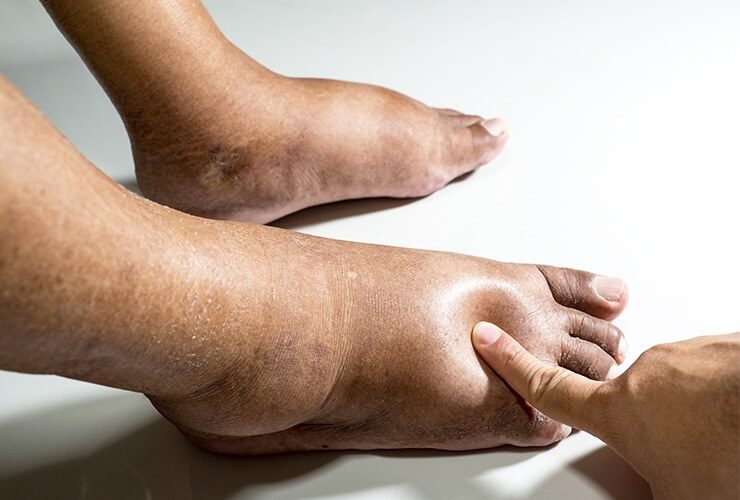
- Edema is swelling caused by excess fluid trapped in your body's tissues.
- Example: This will expedite the removal of reduce spasms, EDEMA and pain as well as reduce nerve root irritation when present.
- fr: Oedème
- Abrasion
- A noun
- An area damaged by scraping or wearing away.
- Example: They are often small dues to ABRASION by trampling and sweeping and the thinness of residual lenses or layers.
- fr: Éraflure
- Defibrillator
- A noun
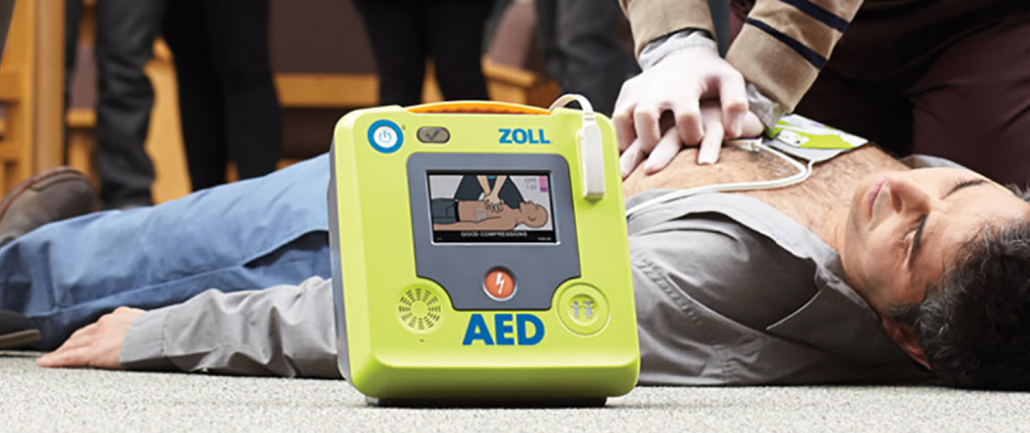
- An apparatus used to control heart fibrillation by application of an electric current to the chest wall or heart.
- Example: The implantable DEFIBRILLATOR has become the standard therapy for protecting patients against sudden cardiac death.
- fr: Défibrillateur
- Relapse
- A noun
- A deterioration in someones' state of health after a temporary improvement.
- Example: It is important to confirm that has been compliant with his medication to ensure that this was not a precipitant for his RELAPSE
- fr: Rechute

- Anaphylaxis
- A noun
- It is a severe, potentially life-threatening allergic reaction.
- Example: ANAPHYLAXIS - There was no report of a direct precipitant to the attack of shortness of breath in the hours preceding the attack drugs, latex etc.
- fr: Anaphylaxie

- Diaphoresis
- A noun
- Sweating, especially to an unusual degree as a symptom of disease or a side effect of a drug
- Example: Many diseases and medical conditions can cause diaphoresis.
- fr: Diaphorèse

- Erythema
- A noun
- Superficial reddening of the skin, usually in patches, as a result of injury or irritation causing dilatation of the blood capillaries.
- Example: There was no finger clubbing, palmer ERYTHEMA or cyanosis of the fingers.
- fr: Érythème

- Atherosclerosis
- A noun
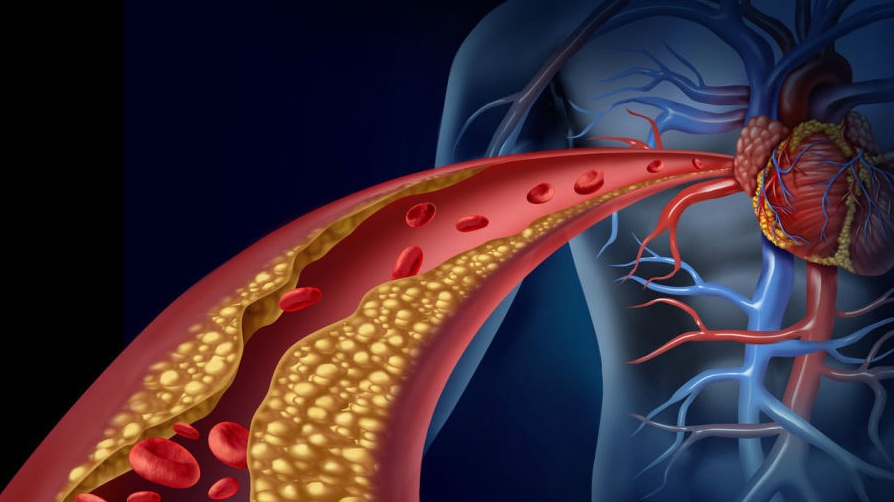
- Atherosclerosis is a disease that occurs when plaque builds up inside arteries. The arteries get hard and narrow, which can restrict blood circulation.
- Example: As described above the most common types of stroke are infarctive, arising typically from degenerative arterial disease either of larger vessels - ATHEROSCLEROSIS
- fr: Athérosclérose

- Dyslipidemia
- A noun
- It is defined an as elevated total or low-density lipoprotein (LDL) cholesterol levels, or low levels of high-density lipoprotein (HDL) cholesterol, is an important risk factoring for coronary heart disease (CHD) and stroke.
- Example: Treatment with high-dose simvastatin, reduces secretion of apolipoprotein B-lipoproteins in patients with diabetic DYSLIPIDEMIA
- fr: Dyslipidémie
- Embolism
- A noun
- It is an obstruction of an artery, typically by a clot of blood or an air bubble.
- Example: Other possible diagnoses which should be excluded at this stage includes Pulmonary EMBOLISM.
- fr: Embolie

- Narcotic
- A noun
- A substance used to treat moderate to severe pain.
- Example: Narcotics are like opiates such as morphine and codeine, but are not made from opium.
- fr: Narcotique

- Facies
- A noun
- The appearance or facial expression of an individual that is typical of a particular disease or condition.
- Example: In medical contexts, a facies is a distinctive facial expression or appearance associated with a specific medical condition.
- fr: Faciès

- Flatulence
- A noun
- The accumulation of gas in the alimentary canal.
- Example: Some foods may cause flatulence.
- fr: Flatulence

